

Moving abroad is exciting, but preparing a flat for an international move can quickly become overwhelming. Unlike a local move, you're dealing with longer transport routes, customs procedures, tighter packing requirements and often a strict moving schedule.
The good news? A little preparation can save you time, money and a great deal of stress.
Whether you're relocating from London to Barcelona, Manchester to Amsterdam or Edinburgh to Paris, this guide will help you prepare your flat properly before moving day.
Start Earlier Than You Think
One of the biggest mistakes people make is assuming a one-bedroom flat won't take long to prepare. In reality, the size of your home doesn't always reflect the amount of work involved.
Preparing a small flat doesn't necessarily mean less work. In many cases, the challenge isn't the amount of space but the number of belongings you've accumulated over the years.
A good example is the kitchen. Many people think they've finished packing until they open the cupboard above the fridge and discover rarely used appliances, spare mugs, baking trays and unopened food. Leaving the kitchen until the final day almost always takes longer than expected.
As a general rule:
- 6–8 weeks before moving: begin decluttering
- 4 weeks before moving: organise important documents
- 2 weeks before moving: start packing non-essential belongings
- Final week: prepare essentials and confirm collection details
Every move is different, but following a simple timeline like this can help you stay organised and avoid last-minute stress. Starting early also gives you time to replace damaged boxes, arrange parking if required and deal with unexpected issues without rushing.
If you're still planning your relocation, our step-by-step guide to planning an international move can help you organise the entire process from start to finish.
Decide What Is Actually Worth Taking
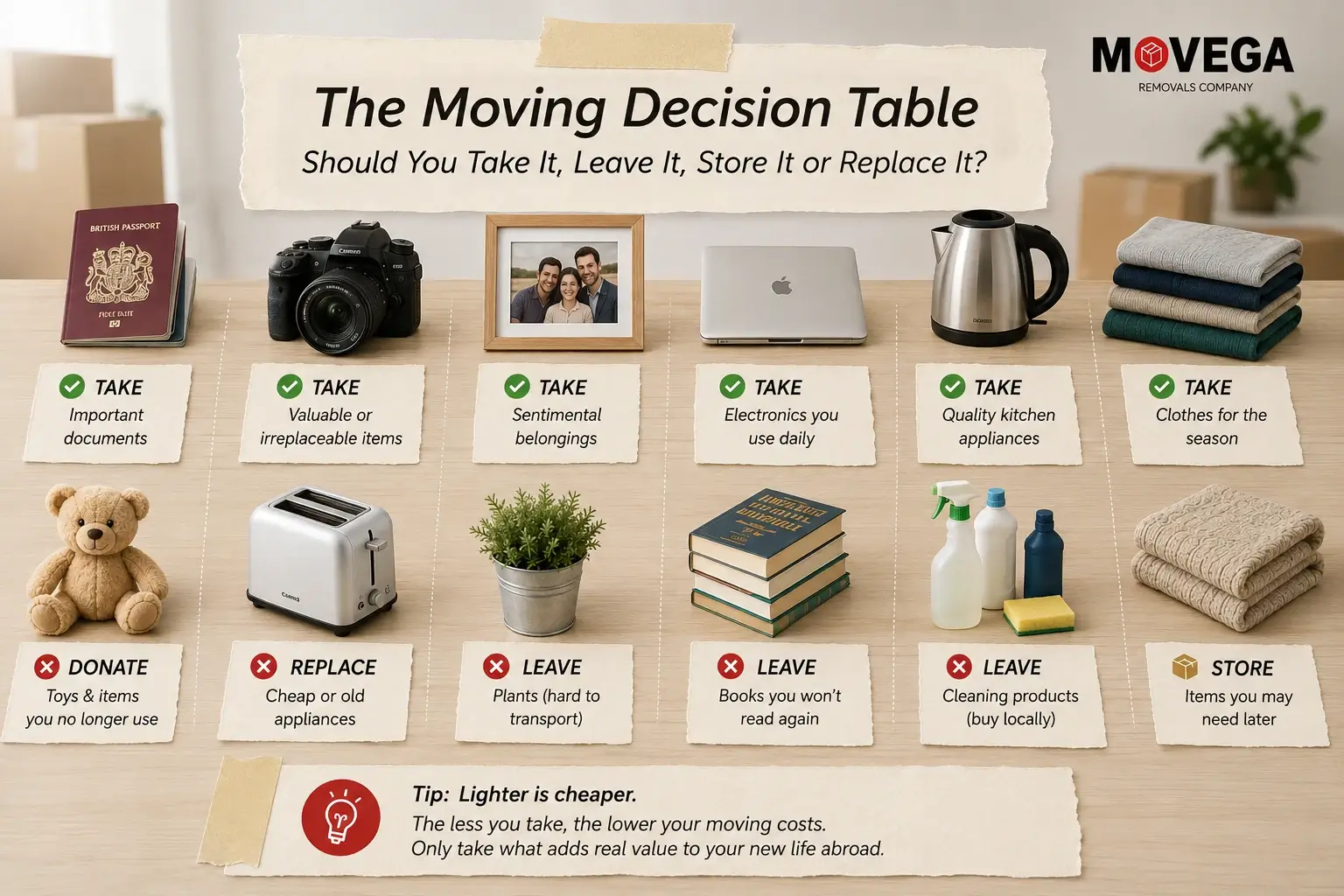
International removals are usually charged according to the volume of your belongings. That means every unnecessary item increases transport costs. Before you start packing your flat, take the time to decide what genuinely deserves a place in the moving van. Every item you leave behind could reduce both the volume of your shipment and the overall cost of your move.
Before putting anything into a moving box, ask yourself a few simple questions:
- Have I used this during the last year?
- Is it cheaper to replace at my destination?
- Does it have sentimental value?
- Will it fit my new home?
Many people discover they can reduce the size of their shipment simply by donating old furniture, recycling broken electronics or selling items they no longer need.
If you're planning to reduce the number of items you take with you, our guide to decluttering before moving offers practical advice on deciding what to keep, donate or recycle.
Imagine you're moving from Birmingham to Belgium and you're deciding whether to take your furniture with you.
Your old IKEA desk cost £70 five years ago, is already damaged and won't fit your new apartment. Paying to transport it across Europe may cost more than replacing it after arrival.
On the other hand, a solid oak dining table with sentimental value is worth taking because replacing it would be significantly more expensive.
Sort Before You Pack
Instead of trying to pack everything you own, focus on what you'll genuinely need in your new home.
As you work your way through the flat, ask yourself whether each item deserves a place in the moving van. If the answer is yes, pack it. If it's useful but no longer fits your lifestyle, consider selling or donating it. Anything broken or unlikely to be used again is usually better recycled or disposed of before moving day.
This approach helps reduce the volume of your shipment while making unpacking much easier once you arrive.
Don't Forget the Hidden Storage Areas
Every flat has hidden storage spaces that are easy to overlook. While most people remember the wardrobes and kitchen cupboards, areas such as under the bed, utility cupboards, balconies, loft spaces or external storage lockers are often forgotten until the last minute. These areas often contain bulky items that require additional packing time.
Your Documents Should Never Be Buried in a Box
Imagine arriving in France only to realise your passport and customs paperwork are packed somewhere inside sixty sealed boxes. Although your belongings will eventually arrive, crossing a border without immediate access to the right documents can quickly turn into a stressful situation.
Keep all essential documents with you throughout the journey, preferably in a waterproof folder or carry-on bag. That includes passports, visas, customs paperwork, insurance documents, medical records and any paperwork relating to your new property.
Having digital copies stored securely in the cloud is also worth considering, just in case something unexpected happens during the move.
If you're moving from the UK to Europe, it's also worth checking our guide to the documents you'll need for an international move, including customs paperwork and other important requirements.
Essentials Box: Pack for Your First Two Days – Not Your Entire Life
Your removal lorry and your arrival don't always happen at exactly the same time.
Even if your belongings are due the following morning, you'll appreciate having everything you need immediately available without opening dozens of boxes.
Think of it as packing for a short weekend away. Fresh clothes, toiletries, medication, chargers, your laptop and a few kitchen essentials will make those first 48 hours considerably more comfortable.
One family packed every phone charger into a sealed moving box, assuming they would unpack later that evening. Instead, their shipment arrived three days later, leaving them unable to charge their phones, laptops or tablets during the journey. A simple essentials bag would have avoided the problem entirely.
If you're not sure what to include, take a look at our complete guide to packing an Essentials Box, where we cover everything you should keep with you on moving day, from important documents to everyday essentials.
Pay Special Attention to Fragile Items
Once you've decided what you're taking with you, it's time to think about how you'll protect it during the journey. International removals often involve longer journeys, multiple loading points and more handling than a local move, which makes proper packing even more important. Each fragile item should be wrapped individually using bubble wrap or packing paper, while any empty space inside the box should be filled to prevent movement during transport. Clearly label boxes containing glassware, ceramics, mirrors, artwork or electronics, and remember that heavy items are always better packed in smaller boxes, while lighter belongings can safely go into larger ones.
If you're packing delicate belongings yourself, our guide to packing fragile items explains the techniques professionals use to minimise the risk of damage. Professional removal companies also use high-quality packing materials for particularly valuable or delicate items, helping reduce the risk of damage during long-distance transport.
Measure Before Moving Day
Most people worry about whether their furniture will fit inside their new home. Far fewer think about whether it can actually leave the current one.
Large sofas, American-style fridge freezers and wardrobes regularly cause delays because they won't fit through communal hallways or apartment lifts.
For example, a couple moving from a third-floor flat in London to Spain discovered on moving day that their sofa wouldn't fit inside the building's lift. Instead of a quick move, the removal team had to carry it down three flights of stairs, adding both time and unexpected costs.
Spending ten minutes measuring access points beforehand can prevent hours of frustration.
That's why it's worth measuring everything before collection day:
- Doorways
- Hallways
- Staircases
- Lifts
- Large pieces of furniture
If access is particularly restricted, your removals company can often suggest suitable solutions, such as an external furniture lift, before moving day.
Label Every Box Clearly
Rather than writing simply "Kitchen" or "Bedroom", make your labels as specific as possible. Labels such as "Kitchen – Plates" or "Bedroom – Winter Clothes" will save you from opening multiple boxes just to find one item. Numbering each box is only half the job. A simple inventory can make unpacking much quicker, particularly after an international move when you're likely to be dealing with dozens of boxes.
For example:
- Box 1 – Kitchen – Plates and Glasses
- Box 2 – Kitchen – Small Appliances
- Box 3 – Bedroom – Winter Clothes
Keeping that inventory on paper or in a notes app also makes it much easier to locate specific boxes without opening them all. It may seem like a small detail, but clear labels can save a surprising amount of time when you're unpacking in a new country.
If you'd like a more organised labelling system, including colour coding, inventory tips and room-by-room examples, read our guide to labelling moving boxes efficiently.
Don't Forget the Final Goodbye
Packing isn't the last job before handing over your keys.
Leaving your flat in good condition is just as important as packing it properly. Whether you're renting or selling, taking the time to clean, carry out a final inspection and complete a few practical tasks can save unnecessary complications later.
Before locking the door for the last time, remember to take meter readings, empty the fridge, cancel utilities and update your address with banks, your GP and other important organisations. Creating a simple checklist for your final day makes it much less likely that something important will be forgotten.
Common Questions People Ask Before an International Move
We generally recommend booking as early as possible, particularly during busy periods such as summer or around Christmas. Booking several weeks in advance gives you more flexibility with collection dates and allows enough time to organise paperwork and prepare your belongings.
Not always. Many professional removal companies offer dismantling and reassembly services, saving time and reducing the risk of damage.
If you're transporting valuable, fragile or bulky belongings over a long distance, professional packing is often well worth the investment. It helps protect your belongings during long-distance transport and can reduce the likelihood of damage.
If you've booked a professional packing service, the moving team can usually complete the packing for you. Otherwise, unfinished packing may delay the collection and extend the moving process.
Final Thoughts
Knowing how to prepare a flat for an international move isn't about packing faster—it's about packing smarter. The more organised you are before moving day, the easier it will be to settle into your new home.
Whether you're moving across the Channel or relocating to another European country, taking the time to organise your belongings, prepare your documents and pack strategically will help make the transition far less stressful.
Preparing your flat properly won't eliminate every challenge that comes with moving abroad, but it will make the process far more manageable. A few hours of planning before moving day can save days of stress once you've arrived in your new home.
And if you'd rather leave the logistics to experienced professionals, Movega can help take the stress out of your international move from the moment you start planning until the last box is delivered.


