

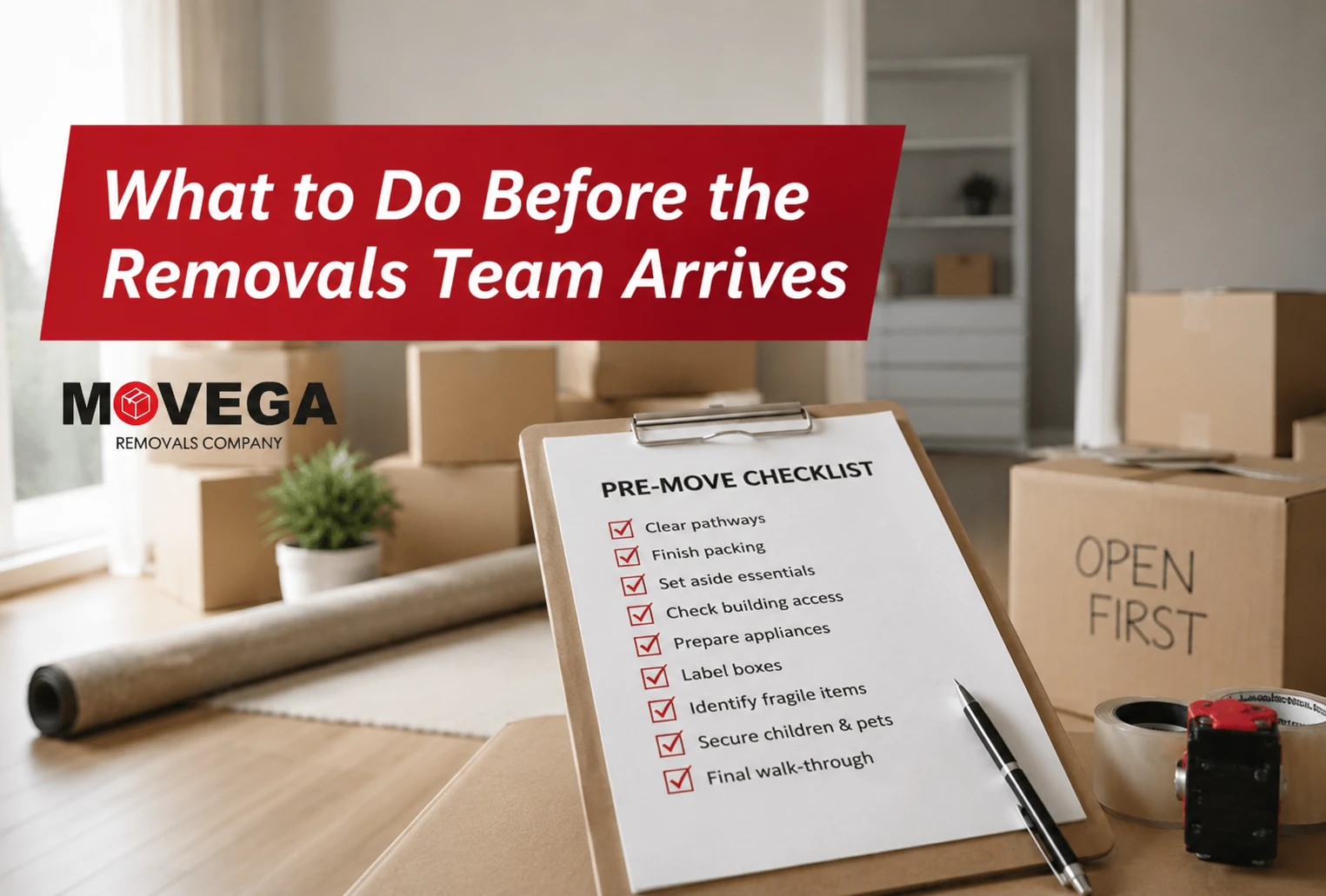
A successful move starts long before the first box is loaded into the truck. The smoothest moves rarely happen by luck — they happen because the property is properly prepared before the removals team arrives.
Most moving day problems are not caused by transportation itself. They usually come from rushed packing, blocked access, unclear organisation or last-minute decisions that create unnecessary stress for everyone involved. When the property is properly prepared before the removals team arrives, the entire process becomes faster, safer and far more manageable.
If you are planning an international move, this matters even more. The process is more demanding, the schedule is tighter and every small delay has a bigger effect. A well-prepared property helps the removals team work efficiently and helps you avoid the kind of chaos that can easily turn moving day into an exhausting experience.
At Movega, we have seen firsthand how small preparations can completely change the flow of a move. Here are the most important things worth taking care of before the team arrives.
Make sure the team can move through the property easily
Before the removals team arrives, take a proper look at the space they will need to work through. Hallways should be clear, stairs should be free of loose items and entrances should be easy to access. It sounds obvious, but this is exactly where many moves start to slow down.
A removals team cannot move furniture quickly if they have to step around shoes, bags, bins, rugs or random boxes left in the hallway. The same applies to doorways and landings. Anything that creates an obstacle also creates a risk. A clean route through the property helps protect both the items being moved and the property itself.
That’s why, before moving day, it is important to clear the main working areas:
- hallways and corridors
- staircases and landings
- entrances and doorways
- lift access areas
- pathways between rooms
If you live in a flat, especially in an older building or one with narrow stairs, this becomes even more important. One small obstruction can turn a simple job into a difficult one.
Finish packing before moving day begins
One of the biggest mistakes people make is treating moving day as packing day. That is where stress begins.
By the time the removals team arrives, everything that is going into the truck should already be packed, sealed and ready to go. Many people underestimate how long the final stage of packing actually takes. What starts as “just a few things left to pack” often turns into rushed sorting, open boxes and unnecessary confusion while the removals team is already trying to load the truck.
The best approach is to finish the organisational side of the move the day before loading begins. If you are short on time or dealing with a larger international relocation, professional packing & unpacking services can make the entire process far more manageable and reduce last-minute stress. Boxes should be closed properly, fragile items should already be protected and each room should be in a state where nothing is still “in progress.” If you are still deciding what to take, the move is not ready yet.
Moving day should not become a race to finish packing while movers are waiting downstairs. The smoother the preparation, the more organised the entire loading process becomes. A good rule is simple: if it is staying with you, keep it separate; if it is being moved, it should already be prepared.
Prepare one “open first” bag or box
This is one of the simplest things you can do before moving day, but it often makes the biggest difference after arrival.
Once the truck is unloaded at the new property, you may not immediately know where every box is. That is why there should be one separate bag, suitcase or box that does not go into the moving truck. Think of it as the box you will rely on during your first evening in the new home. If you are unsure what should go inside it, our guide on How to Pack a Moving Essentials Box (Day One Survival Kit) covers the most important items worth keeping close during the move.
| Item category | What to keep separate |
| Documents | Passports, IDs, contracts, moving paperwork |
| Health items | Medication, prescriptions, glasses, first aid items |
| Electronics | Chargers, power banks, laptops, adapters |
| Personal essentials | Toiletries, towels, a change of clothes |
| Household basics | Toilet paper, kettle, snacks, water |
| Family needs | Children’s essentials, pet supplies |
| Valuables | Jewellery, watches, irreplaceable items |
If you are moving with children or pets, their essentials should stay with you as well rather than disappear into the main load. This one step saves a lot of frustration. Once the truck is gone and the boxes are stacked in the new property, you do not want to start opening cartons just to find a charger or a toothbrush.
Sort parking and building access in advance
A lot of moving problems have nothing to do with the move itself. They come from access.
If parking is restricted outside your home, that needs to be thought through before the team arrives. If the building needs a booking for the lift, that should be arranged in advance. If your road has time restrictions, loading bays, entry codes or access permits, those details need to be confirmed ahead of time.
Access problems can slow a move down much more than people expect. They waste time, increase carrying distance and make the whole move more difficult than it should be. In properties with narrow staircases, tight entrances or upper-floor access limitations, an external lift can sometimes make the move significantly safer and more efficient. In some cases, it can also mean the removals team has to work under pressure because the truck cannot be parked where it should be.
Before moving day, check:
| Access preparation | Why it matters |
| Parking availability | Reduces carrying distance and delays |
| Lift reservations | Prevents waiting times in apartment buildings |
| Entry permits or codes | Allows immediate access |
| Building restrictions | Avoids loading interruptions |
| Road access limitations | Helps the team plan correctly |
Professional movers can work much more efficiently when these details are handled beforehand rather than solved under pressure during loading.
Give appliances more preparation time than you think
Large appliances need more care than people usually expect. A refrigerator cannot simply be unplugged a few minutes before the team arrives and immediately loaded into the truck. Washing machines, dishwashers and similar appliances also need proper preparation.
Refrigerators and freezers should usually be defrosted in advance so they are dry on moving day. Washing machines may need to be drained and secured. Loose shelves, trays and detachable parts should be removed or fastened safely so they do not move during transport.
A poorly prepared appliance is not just difficult to move — it can also create leaks, internal damage or transport risks for nearby items.
If you are unsure how specific appliances should be prepared, it is always better to ask your removals company in advance rather than improvise on the day itself. Professional packing & unpacking services can also help ensure appliances, kitchenware and fragile household items are prepared properly before transport.
Label boxes for the new home, not the old one
Poor labelling creates confusion during unloading. Clear labels make the entire unloading and unpacking process much easier. Our guide on How to Label Moving Boxes the Right Way (And Why It Matters) explains a few simple techniques that can save a surprising amount of time during both loading and unpacking.
The problem is that many people label boxes in ways that stop being useful the moment the truck arrives at the new property. Writing “miscellaneous” on every box does not help anyone. Neither does labelling everything with only the name of a room. Good labels should make sense to the people unloading the property and to the person unpacking later.
Useful labels usually include both the room and the type of contents. For example, “Kitchen – everyday plates” is much more useful than “kitchen.” If there is a box that needs to be opened immediately, label it clearly as “Open First.”
Think practically. A clear label should tell both you and the movers:
-
- where the box belongs
- what type of items are inside
- whether it should be prioritised
For example:
-
- “Kitchen – Everyday Plates”
- “Office – Monitor & Cables”
- “Main Bedroom – Open First”
A clear labelling system saves time on both ends of the move. The team can place items more efficiently, and you can find what you need much faster once you arrive.
Keep fragile and valuable items under control
Do not wait until the truck is at the door to decide which items need special handling.
Mirrors, artwork, glass tables, antiques, musical instruments and other fragile belongings should be identified in advance. If you are packing delicate items yourself, our guide on How to Pack Fragile Items for a Move: Expert Tips to Prevent Damage explains the safest ways to reduce the risk of damage during transport. Professional movers should be informed in advance about any items that require additional protection, special positioning or delicate handling.
If you have items that are not only fragile but irreplaceable, it is often smarter to keep them with you rather than leave them to the general loading process. This usually applies to documents, jewellery or small sentimental belongings. That decision depends on the item, the distance and the move itself, but it should be made before the team arrives — not during loading.
Create a calmer environment for children and pets
Moving day is noisy, busy and unpredictable. It is stressful for adults and often even more overwhelming for children and animals.
If possible, arrange for young children to be elsewhere while the move is being loaded. If that is not possible, at least keep them in a safe, quiet space away from the main activity. Pets should also be secured properly so they cannot slip out through open doors or become stressed by the movement around the property.
A calmer environment helps reduce stress for everyone involved and allows the removals team to work more safely without unnecessary interruptions.
Do one final walk-through before the truck leaves
Before the truck departs, take a few extra minutes to walk through the property one final time. The final check matters more than people think.
Walk through every room carefully and check the places where forgotten items usually hide: wardrobes, drawers, cupboards, lofts, basements, garages and outdoor storage areas. This is where chargers, keys, documents and other small items are most often left behind.
Pay special attention to:
-
- built-in storage spaces
- kitchen cupboards
- bathroom cabinets
- lofts and basements
- outdoor storage areas
- hidden shelves and drawers
A final walk-through does not take long, but it can prevent very annoying problems later. Once the move is underway, it is too late to go back for the things you should have checked the first time.
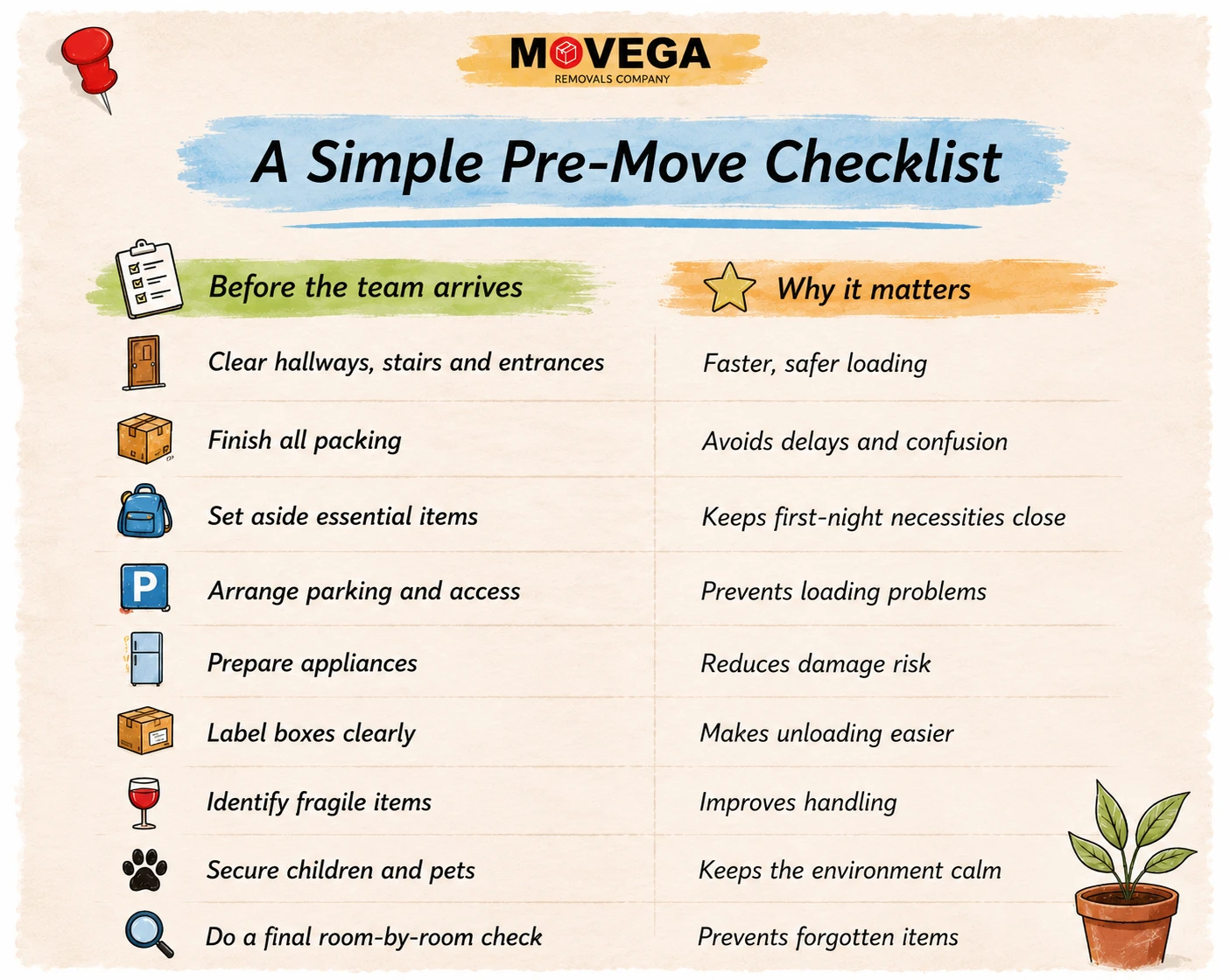
Good preparation changes the entire moving experience
A removals team can only work as efficiently as the property allows. When the home is ready, the move feels more controlled, the work goes faster and the risk of damage goes down.
That is especially important for international removals, where timing, access and organisation all matter more. The best moves are never rushed at the last minute. They are prepared properly before anyone starts lifting boxes. If the property is ready, the rest of the move has a much better chance of going the way it should.
At Movega, we believe the best moves are not rushed. They are planned carefully, prepared properly and handled professionally from the very beginning.


